

#161 Reflections from the "Germany as a Technology Hub" programme
In this edition of Technopolitik, Bharath Reddy talks about his experience and takeaways from his visit to Germany, as part of the Auswärtiges Amt (Federal Foreign Office) Germany’s Visitors Programme.
This newsletter is curated by Anwesha Sen.
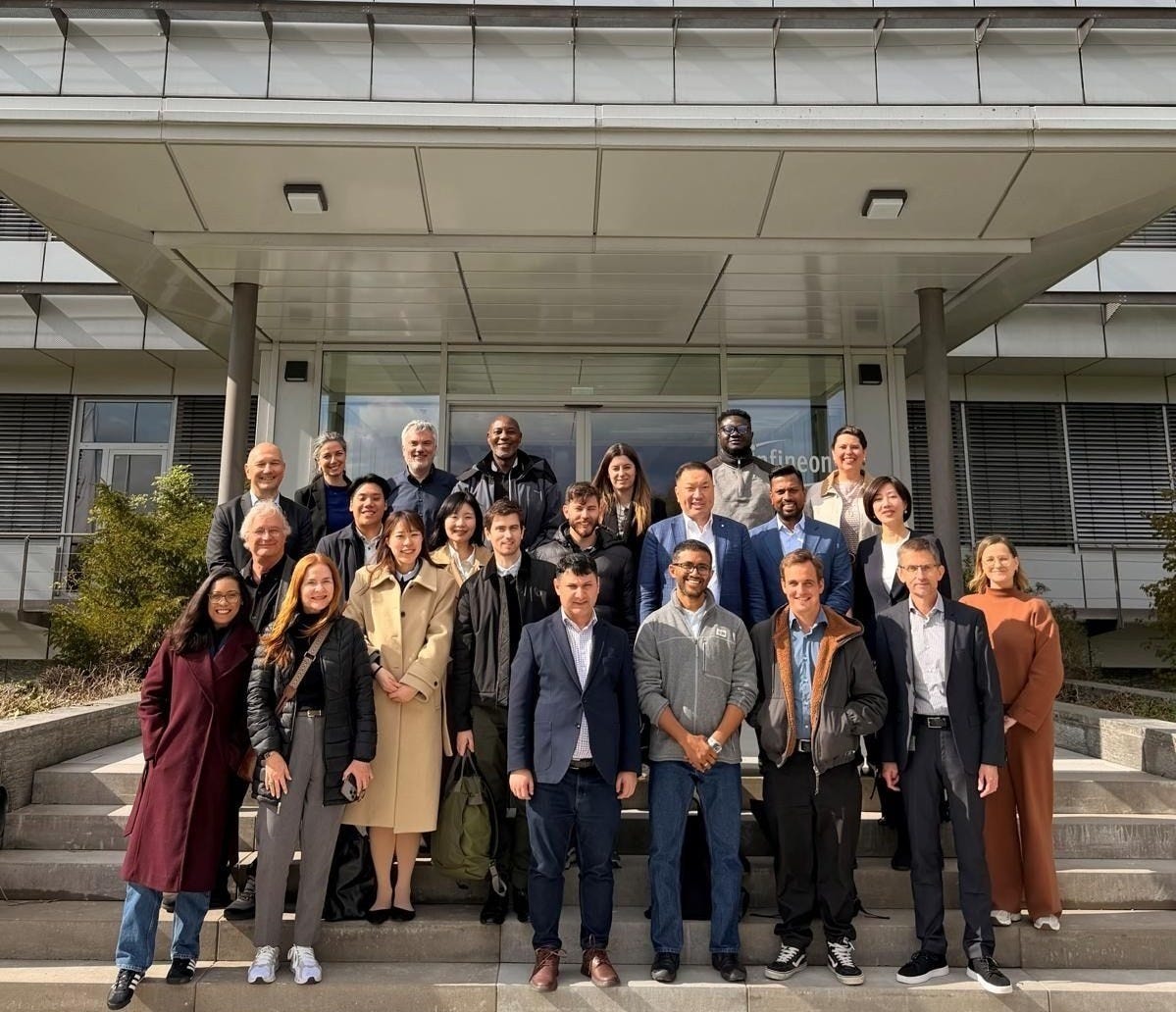
I had the opportunity to spend a week of April in Germany as part of the Auswärtiges Amt (Federal Foreign Office) Germany’s Visitors Programme on “Germany as a Technology Hub”. The programme included journalists, think-tankers, industry leaders, and business development – sixteen participants, each from a different country.
The Visitors Programme’s organises themed trips that enable participants to “see Germany with their own eyes and thus gain an authentic, up-to-date and nuanced insight into the country”. The programme itself seemed to be a great way to showcase the ecosystem, develop soft power, and attract investments and collaborations. I’m sharing some things that stood out for me in terms of what makes the German tech ecosystem work and lessons that it might hold for India.
Fraunhofer And Technology Diffusion
The Fraunhofer-Gesellschaft, Germany’s applied research network, runs 75 institutes, over 30,000 employees, and an annual budget of €3.6 billion. It focuses on Technology Readiness Levels 4 to 7, and makes state of the art research capabilities accessible to the private sector.
Diffusion By Design
Three design choices make this work. A funding model that prices the institute by the market. Roughly one-third of Fraunhofer’s budget comes from federal and state base funding, one-third from industry contracts, and one-third from competitively won public grants. The more an institute earns from industry, the more federal base funding it receives, up to a cap. Industry demand triggers the public match and institutes that cannot attract contracts shrink. This inverts the default in most national R&D systems, where institutional funding is unconditional and industry engagement is an option rather than a requirement.
Competition between the institutes themselves. The 75 institutes operate as profit centres and compete with each other to secure industry contracts and public grants. Underperformance has consequences and protected fiefdoms cannot survive.
Alignment with industry. Fraunhofer research efforts are aligned with the needs of industry. It takes technology to prototype stage and hands it off. While there are spin-offs from some of the research projects, it does not productise, manufacture, or compete with its own clients, which preserves industry’s willingness to pay for its services.
Spillovers: Startups, Returns, GDP
More than 480 spin-offs have come out of Fraunhofer since 2000. Over 7,000 active patent families generate €164 million in annual licensing revenue.
Fraunhofer’s own impact studies estimate that companies cooperating with it are 10.2 percentage points more likely to launch new products. Every €1 of public funding is estimated to return €4 in tax revenue, with GDP effects amounting to 18 times Fraunhofer’s revenue. The numbers come from Fraunhofer-commissioned research; even halved, they are remarkable.
Challenges in Replicating the Model
The model has been admired widely but is challenging to replicate. Two reasons matter for India.
Institutional maturity. Fraunhofer’s competitive funding mechanism depends on the willingness of the state to close or restructure underperforming institutes, and on institutes themselves to operate with accountability and without political capture.
The missing Mittelstand. Fraunhofer works because Germany has thousands of medium-sized engineering firms that need outsourced R&D but cannot afford in-house labs. In India, large conglomerates have their own R&D facilities and MSMEs cannot afford applied research contracts. Without a demand side, no Fraunhofer-shaped institution will find revenue at the one-third industry mark.
The lesson for India is to recognise that institutions of diffusion are as important as institutions of discovery, and to design them for the industrial base we actually have, not the one we wish we had.
On Clusters and Compounding
Saxony has several major semiconductor fabs in dense proximity – Infineon, GlobalFoundries, Bosch and Jenoptik. ESMC, a TSMC-led joint venture with Bosch, Infineon and NXP, backed by €5 billion in German federal funding, is expected to begin operations from 2027. Every third chip produced in Europe is Made in Saxony. The fabs are the visible part but the microelectronics cluster has 3,650 companies and employs 83,000 people across the value chain.
Industrial agglomeration has many benefits: a deep labour pool, specialised suppliers, and knowledge spillovers. All three operate in Dresden. Workers move between GlobalFoundries, Infineon and Bosch, carrying tacit process knowledge in their heads. Equipment suppliers and industrial-gas providers operate at scale because there are enough buyers within driving distance. Fraunhofer institutes and TU Dresden train engineers who can walk to their next job. A “Made in Saxony” reputation signals quality to international buyers without any individual firm having to spend on the branding.
The result is non-linear. The second fab values the talent pool the first one created; the third values the suppliers the first two attracted; the fourth comes for the brand. Clusters are sticky in a way single firms cannot be. A fab can be moved with enough money but a cluster cannot, because what makes it work is a web of relationships that took decades to weave.
India has its own clusters. Tamil Nadu is a manufacturing hub for automobiles and electronics. Bengaluru, Hyderabad, Pune, Chennai, and Delhi-NCR have GCC clusters. Each generates agglomeration benefits at its own scale. It is fascinating to observe what cluster economics delivers when you let them compound over decades. From a talent and supplier ecosystem the compounding returns can evolve into a brand. Their value value grows non-linearly with each addition.
If there is a single thread running through both Fraunhofer and Saxony, it is that Germany’s advantage lies less in any individual lab or fab than in the institutional scaffolding around them. A funding rule that took decades to tune, a cluster whose relationships took decades to weave, both reward patience and time. For India, as we face the temptation is to fund the discovery and treat diffusion as something that follows automatically. The institutions that move technology from prototype to product, and the ecosystems that let one firm’s investment become the next firm’s reason to arrive, are the harder thing to build and the more durable thing to own.
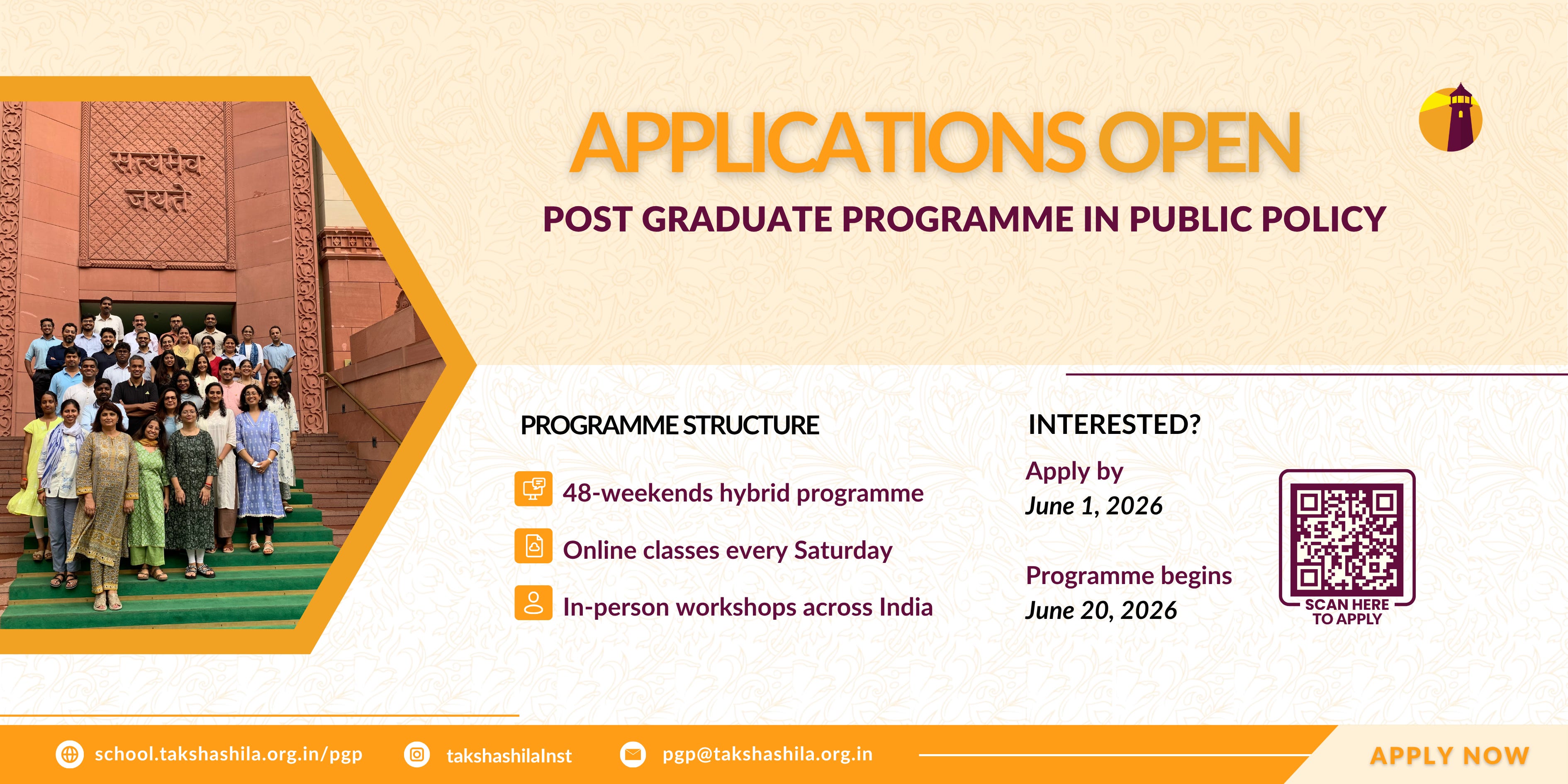
The Post Graduate Programme in Public Policy is a comprehensive 48-week hybrid programme tailored for those aiming to delve deep into the theoretical and practical aspects of public policy. This programme emphasises both academic knowledge and hands-on experience, blending conceptual learning with policy simulation exercises. Beyond the online webinars, students also get the added advantage of engaging with Takshashila’s esteemed subject matter experts and its vast alumni community.
Overall, this intensive programme will arm you with all the essential skills for policymaking, analysis, persuasion, and communication, preparing you for your chosen career path in public policy.
And before you go-
Check out The Bio-Logic, a newsletter by Anisree Suresh that analyses the economic logic and policy pathways to build India’s USD 300 billion bioeconomy by 2030!